
Lionel Messi: More Than Just a Footballer
- Introduction: Diving into the World of Lionel Messi
- Barcelona: The Making of a Legend
- The International Journey: Chasing Glory with Argentina
- The PSG Chapter: A Brief but Trophied Stop
- The Inter Miami Effect: Messi in MLS
- Analyzing the Magic: Messi’s Unique Style
- Beyond the Pitch: Family, Philanthropy, and Future
- Legacy: The Enduring Impact of the GOAT
- Conclusion: The Unfolding Story of Lionel Messi
Lionel Messi is a name synonymous with footballing brilliance, a player who has redefined what’s possible on the pitch. For years, I, like millions around the globe, have been captivated by the sheer artistry and consistent excellence displayed by this Argentine maestro. It’s not just the goals or the assists, though there are countless of those; it’s the seemingly impossible dribbles, the visionary passes, and the quiet determination that sets him apart. Growing up watching football, you see many talented players, but then there are those rare few who make you question what you thought you knew about the sport. Lionel Messi is firmly in that latter category. He’s not just a player; he’s an era.
Dive into the world of Lionel Messi, and you’ll find a story of a prodigious talent who overcame early challenges to reach unprecedented heights. From his humble beginnings in Rosario, Argentina, to becoming a global icon, his journey is nothing short of inspirational. My own experience following football has been significantly shaped by watching Messi play, from his early days as a fleet-footed winger at Barcelona to his captaincy of the national team. It felt like witnessing history unfold in real-time.
Barcelona: The Making of a Legend
The story of Lionel Messi is inextricably linked with FC Barcelona. He arrived at the club’s famed La Masia academy at just 13 years old, with Barcelona agreeing to pay for his growth hormone treatment. This act of faith would prove to be one of the most significant investments in football history. My first vivid memories of watching Messi were in a Barcelona shirt, weaving through defenders with a grace that seemed almost unfair. He wasn’t the biggest player on the pitch, but his low center of gravity and incredible close control made him nearly impossible to dispossess.
His senior debut came in October 2004 at the age of 17, and it didn’t take long for him to establish himself as a key player. What followed was an era of unprecedented success for Barcelona. Under coaches like Pep Guardiola, Messi thrived, becoming the focal point of the team’s mesmerizing tiki-taka style of play. He won a club-record 35 trophies with Barcelona, including 10 La Liga titles and four UEFA Champions League crowns. The sheer volume of silverware is staggering, but it was the *way* they won, often spearheaded by Messi’s brilliance, that truly captivated audiences.
During his 17 years in the first team, Leo Messi shattered countless records. He became Barcelona’s all-time leading scorer with an astonishing 672 goals and holds the La Liga records for goals (474) and assists (192). I remember watching some of those games, thinking, “How did he even do that?” time and time again. His consistency was just mind-boggling. He wasn’t just scoring; he was assisting, dictating play, and often carrying the team on his back. It was during this period that he cemented his status as arguably the greatest of all time, winning a record six Ballon d’Or awards by 2019 while at the club.
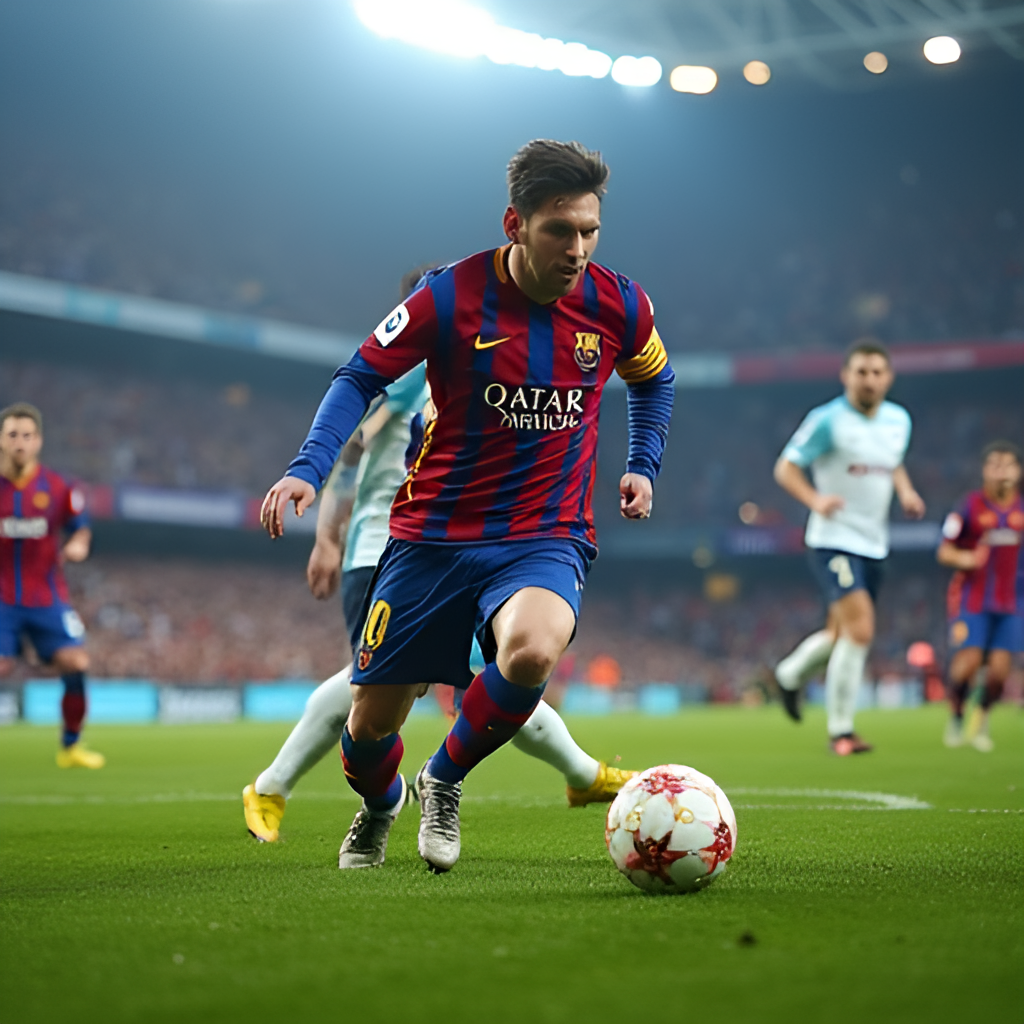
This image is a fictional image generated by GlobalTrendHub.
The International Journey: Chasing Glory with Argentina
While his club career was a fairytale for many years, Lionel Messi’s journey with the Argentine national team was often marked by heartbreak. He won the FIFA World Youth Championship in 2005 and an Olympic gold medal in 2008, but senior international glory eluded him for years. I remember the palpable tension during major tournaments, the hope that *this* would be the one where Leo finally lifted a major trophy for Argentina. He led them to three consecutive finals between 2014 and 2016 (World Cup, Copa América, Copa América Centenario), only to lose all three.
There were moments of immense pressure, even criticism from some quarters, questioning if he could replicate his club form on the international stage. My personal feeling was always that he gave everything, but football is a team sport, and sometimes, despite one player’s best efforts, it’s just not enough. However, the narrative changed dramatically in recent years. Messi finally broke Argentina’s long trophy drought by winning the Copa América in 2021, a moment of pure joy and relief for him and the entire nation.
But the pinnacle arrived in 2022 at the FIFA World Cup in Qatar. At 35, many wondered if he had one last major tournament left in him. He answered those doubts with a series of mesmerizing performances, scoring seven goals, including two in the final against France. Argentina won the World Cup for the first time in 36 years, fulfilling Messi’s lifelong dream and arguably settling the “greatest of all time” debate for many. Witnessing him lift that trophy felt like the perfect culmination of a legendary career, a moment of redemption after years of trying.
For more on his international career, check out this resource on Messi at Argentina.
The PSG Chapter: A Brief but Trophied Stop
After an emotional farewell from Barcelona due to financial difficulties, Lionel Messi made a surprising move to Paris Saint-Germain (PSG) in August 2021. Joining forces with stars like Neymar and Kylian Mbappé, the expectation was that this formidable trio would conquer Europe. While he won two Ligue 1 titles and a Trophée des Champions with PSG, the highly coveted Champions League title eluded them.
His time in Paris wasn’t always smooth, with reports of difficulty adapting and a strained relationship with some fans. Personally, it felt strange seeing him in a different club shirt after so many years at Barcelona, and it seemed he never quite found the same rhythm or sheer joy he exhibited at the Camp Nou. Despite this, his statistics weren’t poor, contributing goals and assists during his two seasons there.
The Inter Miami Effect: Messi in MLS
In July 2023, Leo Messi embarked on a new adventure, joining Major League Soccer (MLS) club Inter Miami. This move sent shockwaves through North American soccer, instantly elevating the profile of the league. The “Messi Effect” was immediate. He led Inter Miami to their first trophy, the Leagues Cup, shortly after his arrival, scoring 10 goals in seven matches. I saw firsthand the excitement he generated; stadiums were packed, tickets were in high demand, and the energy around the team was electric. It’s incredible how one player can completely transform the perception and performance of a club.
He has continued to make an impact in MLS, contributing goals and assists and helping Inter Miami achieve success, including winning the 2024 MLS Supporters’ Shield. His presence has not only brought attention to Inter Miami but also to the entire league, inspiring a new generation of fans and players in the United States.

This image is a fictional image generated by GlobalTrendHub.
Analyzing the Magic: Messi’s Unique Style
Analyzing Lionel Messi’s style of play is like trying to dissect a masterpiece. It’s a blend of innate talent and honed skill. His most recognizable trait is arguably his dribbling ability. With a low center of gravity and incredible balance, he can change direction rapidly, leaving defenders grasping at air. It’s almost as if the ball is glued to his feet. I remember one specific goal against Getafe years ago, often compared to Maradona’s famous solo effort, where he seemingly glided past defender after defender. It was a perfect illustration of his unique dribbling style.
But he’s not just a dribbler; he’s also a phenomenal passer and playmaker. His vision to spot a pass that others don’t see is exceptional, and his execution, whether it’s a short one-two or a long diagonal ball, is usually perfect. He combines the roles of a goalscorer and a creator seamlessly, often leading the league in both goals and assists in the same season. His free kicks have also become legendary, bending the ball with precision and power.
What truly sets Leo Messi apart, in my opinion, is his footballing intelligence. He seems to see the game in slow motion, making the right decision under pressure time and time again. Even as he’s gotten older, his ability to read the game and find space remains elite. While rivals like Cristiano Ronaldo have a different, more direct style, Messi’s influence is often felt throughout the entire attacking phase, orchestrating play from deeper positions before exploding into the final third.
Beyond the Pitch: Family, Philanthropy, and Future
Off the field, Lionel Messi maintains a relatively private life compared to some global superstars. He is married to his childhood sweetheart, Antonela Roccuzzo, and they have three sons: Thiago, Mateo, and Ciro. Family seems to be incredibly important to him, and he often shares moments with them on social media. I’ve always appreciated this aspect of his personality; despite the fame and pressure, he seems grounded and focused on what truly matters.
He is also involved in philanthropic work through the Leo Messi Foundation, which he established in response to his own childhood medical difficulties. The foundation supports access to education and healthcare for disadvantaged children, providing medical treatment and covering associated costs for those in need. It’s inspiring to see him use his platform and resources to help others, particularly children facing similar challenges to what he experienced.
As he enters the later stages of his career, the question of retirement and his future plans looms. While he has hinted that the 2022 World Cup might have been his last, he remains open about the possibility of playing in the 2026 tournament. Regardless of when he hangs up his boots, his impact on the sport is undeniable. Many believe he will continue to be involved in football, perhaps through coaching, mentoring, or ambassadorial roles.
Legacy: The Enduring Impact of the GOAT
Lionel Messi’s legacy in football is already secured, but it continues to evolve. With a record eight Ballon d’Or awards and 46 career trophies, he is the most decorated player in the history of the sport. His statistics are almost mythical, but his influence goes beyond numbers. He has inspired a generation of players and fans with his skill, dedication, and humility.
The “Messi Effect” isn’t just about shirt sales or attendance; it’s about changing perceptions and demonstrating that with hard work, talent, and perseverance, extraordinary things are possible. His ability to consistently perform at the highest level for nearly two decades is a testament to his professionalism and love for the game. As someone who has followed his career closely, I feel privileged to have witnessed such a unique talent. He didn’t just play football; he elevated it to an art form.
Conclusion: The Unfolding Story of Lionel Messi
In conclusion, Lionel Messi is a footballing phenomenon whose impact on the sport is immeasurable. From his early days overcoming adversity to his record-breaking career at Barcelona, his international triumph with Argentina, and his current chapter in MLS, his story is one of dedication, talent, and unwavering passion. The world of Lionel Messi is fascinating, filled with moments of pure magic and consistent excellence that few athletes in any sport have ever matched. As he continues to grace the pitch, we can only watch in anticipation, grateful for the opportunity to witness the unfolding story of one of the greatest footballers of all time. He’s a legend, a role model, and a true icon of the beautiful game.