
Cleveland Browns Analysis: Assessing the Team’s Past and Future
- Introduction: Diving into Cleveland Browns Analysis
- A Storied Past: Key Moments in Cleveland Browns History
- Current State of the Team: Roster Breakdown and Coaching
- Analyzing Recent Performance and Challenges
- The Road Ahead: Future Outlook and Expectations
- More Than a Team: Building the Dawg Pound Culture
- FAQs About the Cleveland Browns
- Conclusion: The Enduring Spirit of the Cleveland Browns
Cleveland Browns analysis: assessing the team’s past and future is a topic near and dear to my heart, and honestly, to anyone who’s ever felt the pull of the Dawg Pound. As someone who’s followed this team through thick and thin – and believe me, there’s been a lot of thin – I’ve seen firsthand how the Browns have shaped the identity of a city. You can’t talk Cleveland without talking Browns football, right? This isn’t just about wins and losses; it’s about a community, a legacy, and a burning desire for gridiron glory that runs deep in Northeast Ohio. In this article, we’ll take a deep dive into the rich history of the team, dissect the current roster and coaching staff, look honestly at recent performance, and cast an eye toward what the future might hold for this iconic NFL franchise.
The history of the Cleveland Browns is, frankly, unlike any other in the NFL. Founded in 1944 by businessman Arthur B. McBride and legendary coach Paul Brown, the team began play in the All-America Football Conference (AAFC) in 1946. They were instantly dominant, winning all four AAFC championships before the league folded in 1949. When the Browns joined the more established NFL in 1950, many doubters expected them to falter, but they proved everyone wrong, reaching the NFL championship game for six straight years and winning titles in 1950, 1954, and 1955. This early success, fueled by Hall of Famers like Otto Graham, Jim Brown, and Lou Groza, cemented the team’s place in football lore. Jim Brown, in particular, is often cited as one of the greatest football players of all time, setting rushing records that stood for decades. The franchise added another NFL championship in 1964, their last to date. However, the team’s journey hasn’t been without heartbreak. The controversial relocation in 1995, which saw the original franchise move to Baltimore, left a gaping hole in the city’s sports landscape. The Browns were reactivated in 1999 as an expansion team, bringing NFL football back to Cleveland, albeit with a fresh start and a tough road ahead.
That period after the return in 1999 was, to put it mildly, challenging. The Browns struggled significantly, particularly through the 2010s, failing to post a winning season throughout that decade. We endured seasons where wins were scarce, like the 0-16 season in 2017, a low point that’s tough for any fan to forget. But even through those lean years, the passion of the fanbase never wavered. That resilience is a key part of understanding the Cleveland Browns team analysis.
Let’s shift our focus to the present state of the Cleveland Browns. The roster has seen significant turnover in recent years as the team has attempted to build a consistent contender. Led by head coach Kevin Stefanski and General Manager Andrew Berry, the team has made strategic moves to acquire talent on both sides of the ball. Key players like defensive end Myles Garrett, a perennial Defensive Player of the Year candidate, anchor the defense. On offense, the team features talented players at various positions. Analyzing the Browns requires looking at the collective talent and how it fits within the coaching scheme.
The quarterback situation has been a significant storyline. After acquiring Deshaun Watson, the team has navigated challenges related to his availability. This has led to other quarterbacks, including veterans and promising rookies, getting opportunities. It feels like there’s always a quarterback competition brewing in Cleveland, which certainly keeps things interesting, if not always stable. The current Cleveland Browns roster features a mix of established veterans and younger players looking to make their mark.

This image is a fictional image generated by GlobalTrendHub.
Beyond the quarterback, the team has invested heavily in the offensive line, featuring Pro Bowlers like Joel Bitonio and Wyatt Teller. A strong running game has also been a hallmark, relying on talented backs. The receiving corps has been bolstered by acquisitions like Jerry Jeudy and the continued development of players like David Njoku at tight end. Defensively, alongside Garrett, players like cornerback Denzel Ward have been key contributors, although Ward’s injury history presents a challenge.
Looking at recent Cleveland Browns analysis, the team has shown flashes of being a playoff contender. The 2020 season was a significant step forward, marking the team’s first playoff appearance since 2002 and their first playoff *win* since 1994, a memorable victory over the Pittsburgh Steelers. That felt like a turning point, a moment where years of frustration finally yielded tangible success. However, consistency has remained elusive. The 2021 and 2022 seasons didn’t meet the heightened expectations, and the 2023 season saw a return to the playoffs despite significant injuries, particularly at quarterback. While the resilience shown in 2023 was admirable, the overall recent record since the 2020 playoff win is 3-14 in 2024, according to Pro-Football-Reference. This uneven performance makes evaluating the Browns a complex task. We’ve seen moments of brilliance followed by periods of struggle, often tied to quarterback play and injuries.
One area that often comes up in Browns team analysis is their financial approach. Reports suggest the team is willing to spend significantly in cash, sometimes exceeding the annual salary cap through creative structuring, though this can create larger cap hits in future years. This aggressive approach shows a commitment from ownership, Jimmy and Dee Haslam, to building a winning team.
So, what does the future hold for the Cleveland Browns? This is where the analysis gets really interesting, and perhaps a bit uncertain. The quarterback situation remains the biggest question mark. Will Deshaun Watson return to his previous form? Will one of the younger quarterbacks like Dillon Gabriel or Shedeur Sanders develop into a long-term starter? Former NFL GM Scot McCloughan sees Gabriel as potentially a “No. 2 for life” at best, while others believe Sanders has a higher ceiling. The team also recently acquired veteran Kenny Pickett and brought back Joe Flacco, who had surprising success in 2023. The competition is stiff, and the outcome will heavily influence the team’s trajectory.
Beyond the quarterback, the core of the roster, particularly on defense with Myles Garrett and the offensive line, provides a solid foundation. However, managing the salary cap, especially with significant contracts, will be crucial moving forward. There’s even been speculation about potential trades involving key players like Denzel Ward, given his contract and concussion history. Looking ahead, the Browns’ lease at Huntington Bank Field is set to expire after the 2028 season, with plans in place for a new indoor stadium in Brook Park by 2029. This significant infrastructure project signals a long-term commitment to the region but also represents a major undertaking for the franchise.
For me, the future of the Cleveland football team outlook hinges on player development and coaching consistency. Can the Browns draft and develop talent effectively? Can Kevin Stefanski and his staff maximize the potential of the roster? The AFC North is a notoriously tough division, featuring strong competitors in the Steelers, Ravens, and Bengals, so the path to contention won’t be easy.
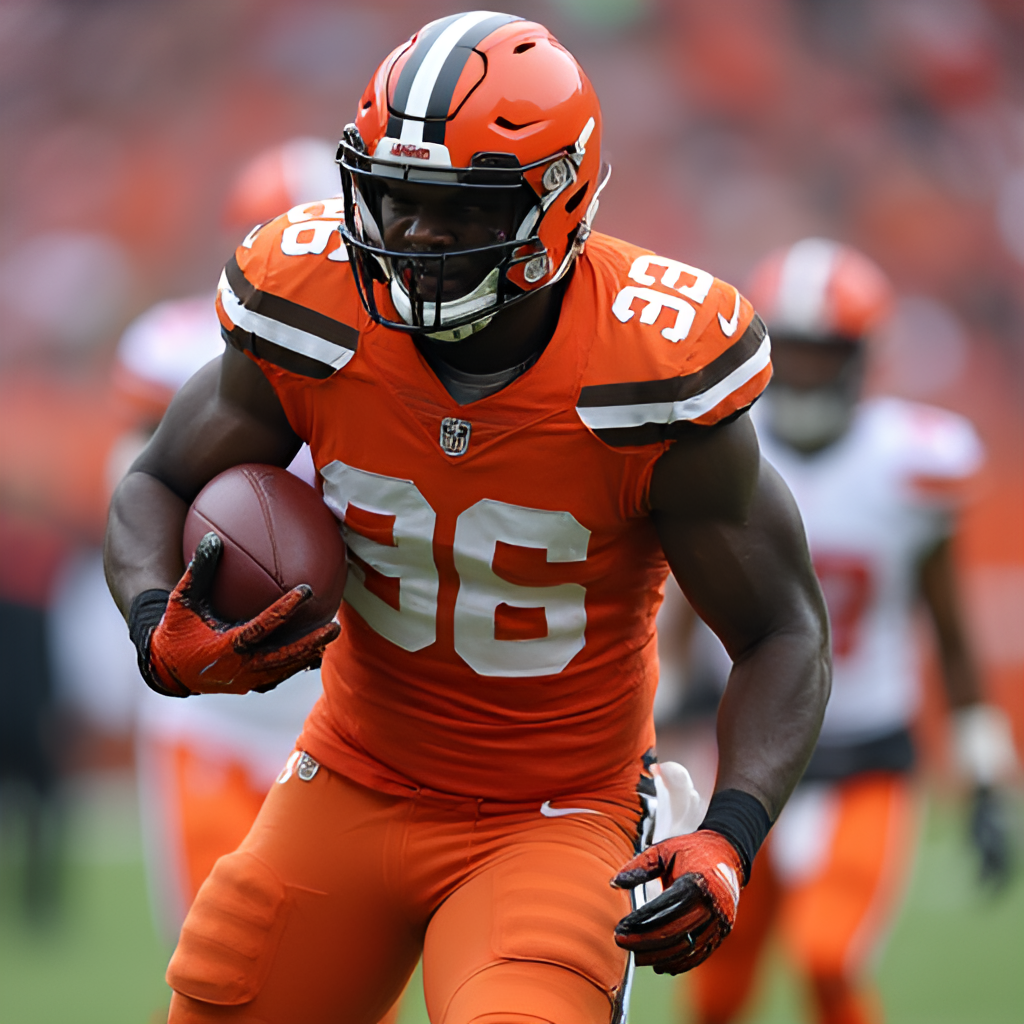
This image is a fictional image generated by GlobalTrendHub.
No Cleveland Browns analysis would be complete without mentioning the Dawg Pound. This isn’t just a section of the stadium; it’s a state of mind, a passionate, vocal fanbase known for their energy, dog masks, and, yes, barking. The Dawg Pound originated in the mid-1980s with defensive backs Hanford Dixon and Frank Minnifield, who started calling their defensive teammates “Dawgs.” This identity resonated with the fans in the bleachers, creating one of the most iconic fan bases in sports. Walking into Huntington Bank Field (formerly FirstEnergy Stadium, and initially Cleveland Browns Stadium) on game day and feeling that energy is something special. It’s a tangible representation of the bond between the team and its city, a source of unwavering support through decades of ups and downs. The current Dawg Pound at Huntington Bank Field continues this tradition, though ticket prices have reportedly made it more accessible to a different demographic than the original Municipal Stadium Dawg Pound.
This unique fan culture is a vital part of the Browns’ identity and something that players often talk about when they join the team. It adds another layer to understanding the dynamics of the Cleveland Browns analysis – the pressure, the expectation, and the incredible motivation that comes from playing in front of such a devoted crowd.
FAQs About the Cleveland Browns
- When were the Cleveland Browns founded?
- The Browns were founded on June 4, 1944, and began play in the All-America Football Conference (AAFC) in 1946.
- How many NFL championships have the Browns won?
- The Cleveland Browns have won four NFL championships: 1950, 1954, 1955, and 1964.
- Where do the Cleveland Browns play their home games?
- The Browns play their home games at Huntington Bank Field in Cleveland, Ohio.
- Who are some of the greatest players in Browns history?
- The Browns boast a rich history with many legendary players, including Jim Brown, Otto Graham, Lou Groza, Ozzie Newsome, Bernie Kosar, and Joe Thomas.
- What is the Dawg Pound?
- The Dawg Pound is the name for the bleacher section behind the east end zone at Huntington Bank Field, famous for its passionate and vocal fans.
In conclusion, the journey of the Cleveland Browns is a compelling saga of historic dominance, heartbreaking setbacks, enduring loyalty, and a perpetual quest for renewed success. Our Cleveland Browns analysis reveals a franchise deeply intertwined with its city, supported by one of the most passionate fan bases in all of sports. While challenges remain, particularly at the quarterback position and in navigating a tough division, the presence of key talent, a committed ownership, and a strategic front office offer reasons for optimism. As a fan, I’ve learned that following the Browns is rarely easy, but it’s always rewarding in its own unique way. The future of this storied franchise is still being written, and I, for one, can’t wait to see what the next chapter holds for the Cleveland Browns analysis and, more importantly, for the team on the field.