
Retirement Planning: Your Roadmap to a Secure Future
- Introduction: Why Your Financial Future Matters
- Key Pillars of Building Your Retirement Savings Strategy
- Understanding Retirement Accounts: Your Savings Vehicles
- Estimating Your Financial Needs in Retirement
- Integrating Social Security into Your Retirement Planning
- Navigating Healthcare Costs in Retirement
- Common Retirement Planning Mistakes to Avoid
- Accelerating Your Journey to Financial Independence
- Partnering for Success: The Value of a Financial Advisor
- Conclusion: Embracing Your Retirement Planning Journey
Retirement planning is among the most crucial financial journeys you’ll embark on, shaping the quality of your life for decades to come. It’s more than just saving money; it’s about creating a comprehensive blueprint that considers your future lifestyle, potential expenses, and income sources. Frankly, I’ve seen too many people delay this process, only to face daunting challenges later. Planning for retirement is an act of self-care for your future self, giving you the peace of mind that comes with financial preparedness. It’s a topic that can feel overwhelming, but trust me, breaking it down makes all the difference. This guide will walk you through the essential steps to help you build a robust retirement savings strategy, ensuring you’re ready to enjoy the freedom retirement brings.
Thinking about retirement often conjures images of relaxation, travel, or pursuing hobbies you never had time for. But achieving that vision requires thoughtful and consistent effort, starting long before you hang up your work boots. In my experience, the earlier you begin this vital work, the more time compound growth has to work its magic, turning even small, regular contributions into a substantial nest egg. We’ll delve into the key components of effective retirement planning, from understanding different savings vehicles to navigating the complexities of Social Security and healthcare costs. By the end of this article, my hope is that you’ll feel more confident and empowered to take control of your financial future.
Key Pillars of Building Your Retirement Savings Strategy
Building a solid financial future in retirement rests on a few fundamental pillars. Ignoring any one of them can leave cracks in your foundation. It’s like building a house; you need a strong base, the right materials, and a clear plan. For retirement, this means:
- Consistent Saving: This is non-negotiable. Regularly setting aside money, even small amounts early on, leverages the power of compounding.
- Smart Investing: Your savings need to grow faster than inflation to maintain purchasing power over time. This requires understanding investment options and risk.
- Realistic Goal Setting: How much will you *really* need? This involves estimating future expenses, considering inflation, and understanding potential income sources like Social Security.
- Understanding Income Sources: Knowing what to expect from Social Security, pensions (if any), and your personal savings is crucial for income planning in retirement.
- Planning for Healthcare: Healthcare costs are a major wildcard in retirement budgets. Factoring these in early is essential.
These pillars are interconnected, and focusing on them collectively provides the stability needed for a secure retirement.
Understanding Retirement Accounts: Your Savings Vehicles
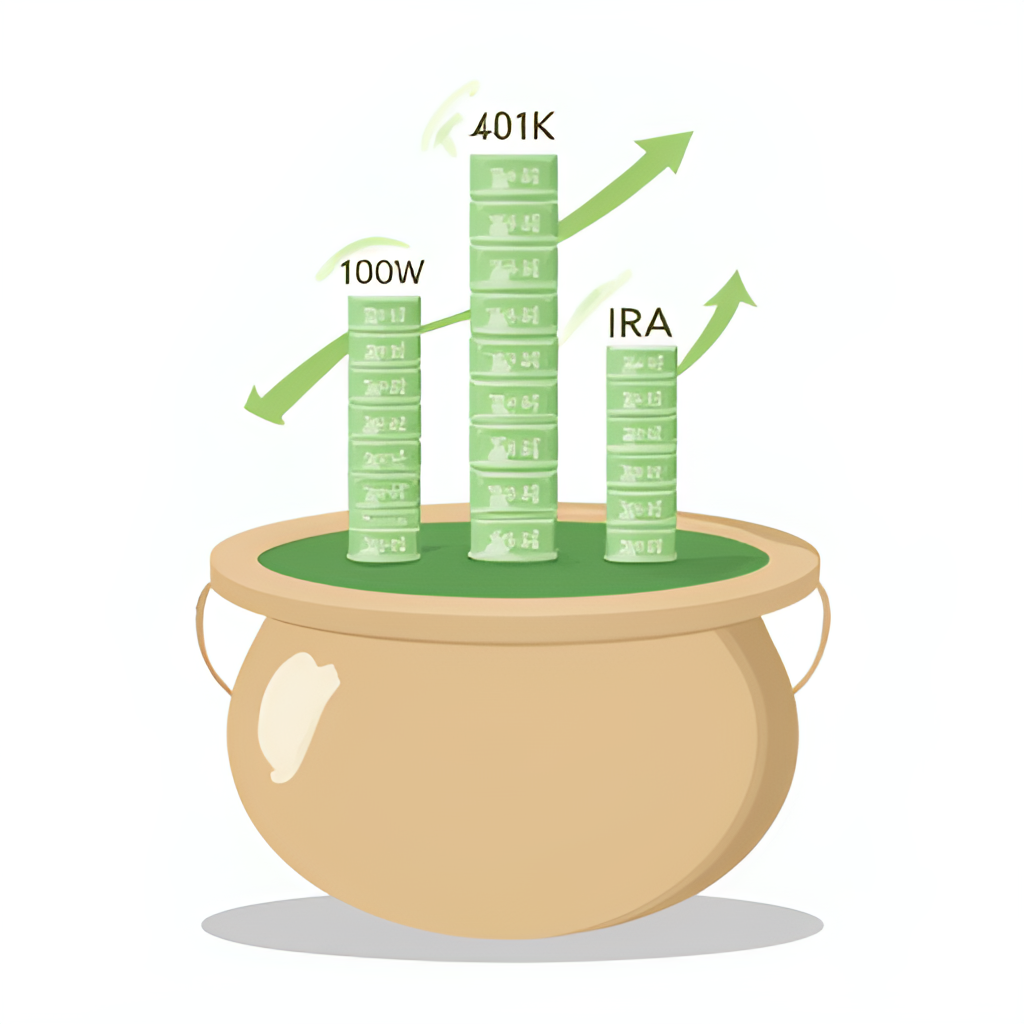
One of the most fundamental aspects of retirement planning involves choosing and utilizing the right savings accounts. These aren’t just bank accounts; they’re specialized investment vehicles offering tax advantages that can significantly boost your savings over time. Based on my research and common knowledge, the most prevalent types in the U.S. are 401(k)s and IRAs.
Choosing the Right Accounts for Your Retirement Planning Goals
Let’s break down some of the key players you’ll encounter on your journey to securing your financial future:
- 401(k) Plans: These are employer-sponsored plans, and they’re fantastic, especially if your employer offers a match. That match is essentially free money! Contributions are often pre-tax (Traditional 401(k)), lowering your current taxable income, and growth is tax-deferred until withdrawal in retirement. Many employers now offer a Roth 401(k) option, where contributions are after-tax, but qualified withdrawals in retirement are tax-free. For 2025, you can contribute up to $23,500 to a 401(k), plus an extra $7,500 if you’re age 50 or older. ,
- IRAs (Individual Retirement Arrangements): These are accounts you open yourself, independent of an employer. Traditional IRAs offer potential tax deductions on contributions now, with taxes paid on withdrawals later. Roth IRAs use after-tax money for contributions, but qualified withdrawals in retirement are tax-free. For 2025, the IRA contribution limit is $7,000, with an additional $1,000 catch-up contribution for those 50 and over. IRAs offer a wide range of investment choices compared to some employer plans.
- Other Plans: You might also encounter 403(b) plans (for non-profits and educators), 457(b) plans (for government employees), and SEP or SIMPLE IRAs (for small business owners and self-employed individuals). , , , Each has unique rules and benefits.
Understanding the tax implications and contribution limits of these accounts is vital for optimizing your retirement savings strategy.
Estimating Your Financial Needs in Retirement
One of the trickiest parts of planning for retirement is figuring out how much money you’ll actually need. It’s not a one-size-fits-all answer, as everyone’s desired lifestyle and expenses will differ. A common guideline suggests you’ll need about 70-80% of your pre-retirement income to maintain your standard of living.
Estimating Your Financial Future in Retirement
Here’s what you need to consider when crunching the numbers:
- Current Expenses: Start by tracking your current spending. This gives you a baseline.
- Future Expenses: Some costs may decrease (commuting, work clothes), while others might increase (healthcare, travel, hobbies). Don’t forget about potential long-term care costs, which Medicare generally doesn’t cover.
- Inflation: This is a silent wealth killer. What costs $100 today will cost significantly more in 20 or 30 years. Your savings plan must account for this erosion of purchasing power. , ,
- Healthcare Costs: We’ll go into more detail below, but seriously, underestimate these at your peril. They can be substantial. , ,
- Desired Lifestyle: Do you plan on extensive travel, taking up expensive hobbies, or living a more modest life? Your vision directly impacts how much you need to save.
While looking at average retirement savings by age can provide a rough comparison, remember that these are just averages and medians, often skewed by high earners. , , Your personal situation is what truly matters.
This image is a fictional image generated by GlobalTrendHub.
Integrating Social Security into Your Retirement Planning
For most Americans, Social Security will be a piece of their retirement income puzzle. Administered by the Social Security Administration (SSA), this federal program provides benefits based on your earnings history. ,
Understanding Your Potential Social Security Benefits
Here’s a quick look at what you should know:
- It’s Not Enough Alone: Social Security was never intended to be your sole source of retirement income. , For someone with average earnings, it might replace around 39% of pre-retirement income.
- Earning Credits: You earn Social Security “credits” as you work and pay taxes. Most people need 40 credits (10 years of work) to be eligible for retirement benefits. ,
- Full Retirement Age: This is the age at which you’re entitled to 100% of your calculated benefit. It varies based on your birth year, gradually increasing to age 67 for those born in 1960 or later.
- Claiming Age Matters: You can claim benefits as early as age 62, but your monthly benefit will be permanently reduced. , Conversely, delaying benefits past your full retirement age (up to age 70) can significantly increase your monthly payment. , , Choosing when to start benefits is a crucial decision in your overall retirement planning.
You can get an estimate of your future Social Security benefits by creating an account on the official SSA website. www.ssa.gov ,
Navigating Healthcare Costs in Retirement
Healthcare is often cited as one of the biggest financial concerns for retirees, and for good reason. While Medicare provides essential health insurance coverage for those 65 and older, it doesn’t cover everything, and there are still costs involved. ,
Factoring Medicare Expenses into Your Retirement Planning
Let’s look at the components:
- Medicare Part A (Hospital Insurance): Most people who paid Medicare taxes while working for 10 years or more don’t pay a monthly premium for Part A. , However, there are deductibles for hospital stays ($1,676 per benefit period in 2025) and potential coinsurance costs for longer stays. ,
- Medicare Part B (Medical Insurance): This covers doctor visits, outpatient care, and preventive services. There’s a standard monthly premium ($185 in 2025 for most) and an annual deductible ($257 in 2025). After meeting the deductible, you typically pay 20% of the Medicare-approved amount for most services. , , Higher-income individuals pay a higher premium. ,
- Medicare Part D (Prescription Drug Coverage): This is optional coverage obtained through private plans. Premiums vary, and there’s an annual deductible (no more than $590 in 2025). Notably, the coverage gap (“donut hole”) is being eliminated, and starting in 2025, out-of-pocket costs for Part D are capped at $2,000 annually. This is a significant change that could benefit those with high prescription costs.
- Beyond Original Medicare: Medicare doesn’t cover everything, like routine dental, vision, or hearing care, or most long-term care. Many retirees purchase Medicare Supplement Insurance (Medigap) to help cover deductibles and coinsurance, or they choose a Medicare Advantage plan (Part C) which bundles Part A, B, and usually D, often with extra benefits, but may have network restrictions. ,
- Health Savings Accounts (HSAs): If you have a high-deductible health plan, contributing to an HSA while working can be a smart move. Funds grow tax-free, and qualified withdrawals for medical expenses (including Medicare premiums and costs in retirement) are tax-free. ,
Estimating future healthcare costs can be challenging, with some projections suggesting a couple might need hundreds of thousands saved just for medical expenses in retirement. , This underscores why it’s critical to incorporate these potential costs into your financial future in retirement planning.

This image is a fictional image generated by GlobalTrendHub.
Common Retirement Planning Mistakes to Avoid
Even with the best intentions, it’s easy to stumble on the path to a secure retirement. Recognizing common pitfalls is the first step to avoiding them. From my perspective, based on observations and common advice, these are some of the most frequent missteps people make:
- Starting Too Late: This is probably the biggest one. Time is your greatest ally in retirement savings due to compounding. Delaying even a few years can mean missing out on significant growth. , , ,
- Not Saving Enough: It sounds obvious, but consistently contributing too little will simply result in a smaller nest egg than you need. Aim to save at least enough to get your full employer match in a 401(k) – don’t leave free money on the table!
- Underestimating Expenses: As mentioned, healthcare and inflation are often significantly underestimated, leaving retirees short on funds. , , ,
- Claiming Social Security Too Early: Taking benefits before your full retirement age permanently reduces your monthly payment. Unless absolutely necessary, waiting can provide a much larger, guaranteed income stream for life. ,
- Investing Too Conservatively: While you should adjust your risk tolerance as you near retirement, being too cautious, especially when you’re younger, means missing out on potential growth needed to outpace inflation. , ,
- Ignoring Taxes: Taxes can eat into your retirement income and savings. Understanding the tax implications of different accounts and withdrawal strategies is crucial. , , ,
- Making Early or Excessive Withdrawals: Dipping into retirement funds before age 59 ½ often incurs penalties and, more importantly, depletes the savings meant to last your entire retirement. , , ,
- Not Having a Plan or Reviewing It: Your financial situation and goals change over time. A static plan is a recipe for trouble. Regularly reviewing and adjusting your retirement planning strategy is key. , , ,
Being mindful of these common errors can help you stay on track towards your goals.
Accelerating Your Journey to Financial Independence
Early retirement is a dream for many, and while challenging, it’s definitely achievable with careful retirement planning and significant discipline. It requires a more aggressive approach than a standard retirement timeline. , ,
Strategies for Achieving Early Retirement
If you’re aiming to retire ahead of the curve, consider these strategies:
- Maximize Your Savings Rate: You’ll likely need to save much more than the commonly recommended 10-15% of your income.
- Aggressively Pay Down Debt: Entering early retirement debt-free significantly reduces your financial burden.
- Increase Income: Explore side hustles, negotiate raises, or seek higher-paying jobs to accelerate savings. ,
- Invest Wisely: Focus on growth-oriented investments, especially when you’re younger, while still maintaining diversification.
- Plan for Healthcare: If retiring before Medicare eligibility (age 65), you’ll need to secure health insurance, which can be costly. ,
- Understand Early Access Rules: Accessing funds from tax-advantaged accounts before age 59 ½ typically incurs penalties. However, there are exceptions like the Rule of 55 (for 401k/403b/457b if you leave your job at 55 or later) or setting up substantially equal periodic payments (SEPP, also known as 72(t) withdrawals). , Roth IRA contributions can also be withdrawn penalty-free anytime. , , ,
- Build Alternative Income Streams: Rental properties, side businesses, or passive income can help bridge the gap before accessing traditional retirement funds. ,
Retiring early requires a dedicated financial future in retirement strategy and often significant lifestyle adjustments.
Partnering for Success: The Value of a Financial Advisor
Given the complexity of retirement planning, from investment options and tax laws to healthcare costs and income projections, it’s understandable that many people feel overwhelmed. This is where a qualified financial advisor can be an invaluable partner. , ,
How a Financial Advisor Benefits Your Retirement Planning
Based on my understanding of the value they provide, working with an advisor offers several key benefits:
- Personalized Plan: They can create a retirement planning strategy tailored specifically to your unique financial situation, goals, and risk tolerance. , , ,
- Expertise and Guidance: Advisors possess deep knowledge of investment options, tax strategies, and retirement regulations, helping you navigate complex decisions. , , , , ,
- Holistic View: A good advisor looks at your entire financial picture, ensuring all pieces work together effectively. ,
- Staying on Track: They provide accountability and help you make necessary adjustments to your plan as life happens or markets change.
- Navigating Withdrawals: Deciding how and when to withdraw your retirement savings is critical and complex; an advisor can help optimize this for tax efficiency and sustainability. , ,
While there are costs involved, the value a good advisor provides in creating and maintaining a robust financial future in retirement plan can often outweigh the fees, especially as your situation becomes more complex.
Conclusion: Embracing Your Retirement Planning Journey
As we’ve explored, effective retirement planning is a multi-faceted process that involves careful consideration of saving, investing, understanding potential income sources like Social Security, planning for significant expenses like healthcare, and avoiding common mistakes. It’s a long-term commitment, not a one-time event, and it requires regular review and adjustment. My personal takeaway from diving deep into this topic is that procrastination is the biggest enemy of a comfortable retirement. Even small steps taken today can have a profound impact thanks to the power of compounding. Embracing your retirement planning journey with diligence and seeking expert guidance when needed are the surest ways to build the financial future you envision.