
BJ Penn: The Complex Legacy of “The Prodigy”
- Introduction: The Impact of BJ Penn
- From Hilo to Black Belt: The BJJ Prodigy Rises
- Early UFC Days and the Lightweight Quest
- Making History: Champion in Two Divisions
- Defining Battles: GSP, Hughes, and Edgar
- Analyzing “The Prodigy’s” Unique Approach
- The Difficult Final Chapter
- Outside the Octagon: Challenges and Concerns
- BJ Penn’s Enduring Impact on MMA
- Conclusion: More Than Just a Fighter
BJ Penn is undeniably one of the most captivating and, let’s be honest, complex figures in mixed martial arts history. As someone who’s followed the sport for years, watching **bj penn** evolve from a jiu-jitsu phenom to a two-division UFC champion was nothing short of electrifying. His journey wasn’t just about wins and losses; it was a rollercoaster of unparalleled highs and, unfortunately, some very public lows that left many fans scratching their heads. We’re going to delve deep into the career of **bj penn**, exploring what made him such a phenomenon, the fights that defined his era, and the challenges he faced both inside and outside the cage.
From Hilo to Black Belt: The BJJ Prodigy Rises
Before he was “The Prodigy” in the UFC, BJ Penn earned that nickname in the world of Brazilian Jiu-Jitsu. Hailing from Kailua, Hawaii, BJ Penn’s introduction to BJJ came at age 17 through a neighbor. His progression through the ranks was astonishingly fast. While it typically takes a decade or more to reach black belt status, Penn achieved it in just over three years. This rapid ascent culminated in a historic moment in 2000 when he became the first non-Brazilian to win the black-belt division at the World Jiu-Jitsu Championship in Rio de Janeiro. Seriously, think about that for a second – a Hawaiian kid goes to the heartland of BJJ and conquers the world. That’s the kind of raw talent that just doesn’t come around often.
This groundbreaking achievement immediately put **bj penn** on the radar of the burgeoning MMA world, particularly the Ultimate Fighting Championship (UFC). His success in BJJ wasn’t just a footnote; it was the foundation upon which his entire fighting career was built. His incredible flexibility, guard passing, and submission skills became hallmarks of his style.
Early UFC Days and the Lightweight Quest
Penn made his professional MMA debut with the UFC in May 2001 at UFC 31, securing a win over Joey Gilbert. He quickly showcased his striking prowess, knocking out opponents like Din Thomas and Caol Uno. My early impressions were that this guy was different; he had the grappling base of a high-level jiu-jitsu black belt but could also stand and trade effectively. His fearless approach meant he was willing to fight anyone, anywhere, often taking on opponents in heavier weight classes even early on.
His first shot at UFC gold came against then-Lightweight Champion Jens Pulver. While he suffered a decision loss in that initial meeting, it was clear Penn was a force to be reckoned with in the lightweight division. The quest for the lightweight title became a central theme of his early UFC career.
Making History: Champion in Two Divisions
One of the defining achievements of BJ Penn’s career was becoming only the second fighter in UFC history to win titles in two different weight classes, following Randy Couture. This cemented his status as an all-time great. His first UFC title came unexpectedly in the welterweight division.
At UFC 46 in January 2004, BJ Penn, despite being considered an underdog, challenged then-dominant Welterweight Champion Matt Hughes. In a stunning upset, Penn submitted Hughes with a rear-naked choke in the first round. This victory was monumental, proving his elite skills translated up a weight class. However, a contract dispute with the UFC led to him leaving the promotion and being stripped of the title.
Upon his return to the UFC, Penn refocused on the lightweight division. He eventually captured the vacant lightweight title by defeating Joe Stevenson via submission at UFC 80 in January 2008. He then unified the interim title by defeating Sean Sherk. What followed was a period of dominance in the lightweight division, where he successfully defended his belt multiple times, setting a record at the time for consecutive lightweight title defenses. This era truly showcased “Penn UFC career” at its absolute peak.
Defining Battles: GSP, Hughes, and Edgar
BJ Penn’s career was marked by unforgettable rivalries that produced some of the sport’s most anticipated fights. The trilogy with Matt Hughes is legendary, culminating in a 21-second knockout win for Penn in their third meeting at UFC 123. Their contests were intense and personal.
Then there was the highly anticipated “superfight” against Welterweight King Georges St-Pierre. Their first meeting was a closely contested battle that GSP won via split decision. The rematch at UFC 94 was historic, pitting two reigning champions against each other. While Penn ultimately lost the fight via TKO, the build-up and the concept of champion vs. champion were massive for the sport.
His rivalry with Frankie Edgar was another defining chapter, particularly in the latter part of his prime. Edgar famously took the lightweight belt from Penn in a close decision and then solidified his claim in the rematch. Watching these rivalries unfold, you got a real sense of the competitive fire that drove **bj penn**.
Analyzing “The Prodigy’s” Unique Approach
BJ Penn’s fighting style was characterized by a rare blend of elite Brazilian Jiu-Jitsu and surprisingly sharp boxing. His ability to seamlessly transition between striking and grappling made him incredibly dangerous. On the feet, he had excellent head movement and a notable counter-jab and straight right. In my opinion, his striking was often underestimated because of his BJJ background.
His jiu-jitsu, of course, was world-class. His guard passing was particularly renowned, often described as taking the basics and “ramming it down the opponent’s throat.” He wasn’t afraid to pull guard or work from his back, a testament to his confidence in his BJJ. This combination of skills made him a nightmare matchup for many fighters.
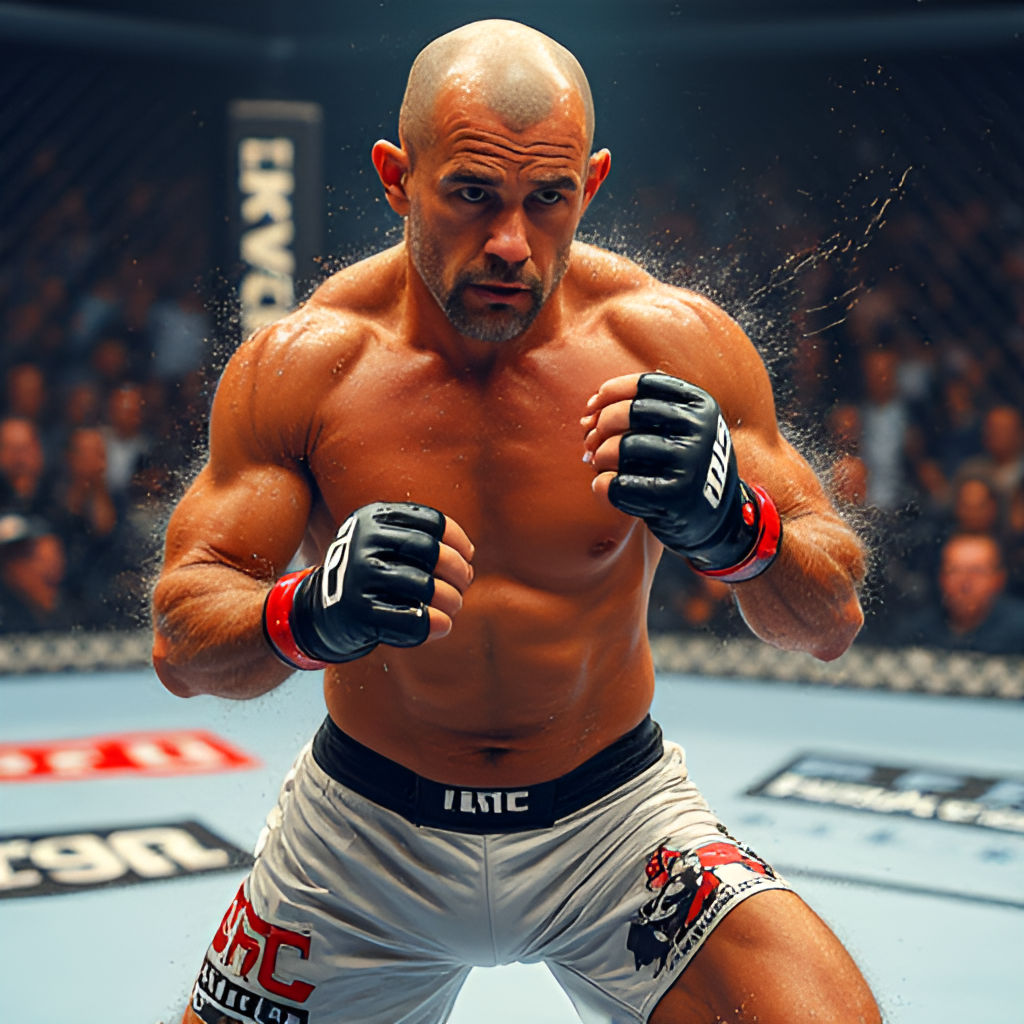
This image is a fictional image generated by GlobalTrendHub.
The Difficult Final Chapter
Following his losses to Frankie Edgar, Penn’s career trajectory took a difficult turn. He struggled to find consistent wins, embarking on a long losing streak that was hard for many long-time fans to watch. He moved between weight classes, trying to find his footing, but the success of his earlier years proved elusive. It felt like his body just couldn’t keep up with the demands of fighting at the elite level anymore.
His final fights were particularly tough, with losses to fighters like Yair Rodriguez, Dennis Siver, Ryan Hall, and Clay Guida. Despite calls for his retirement, Penn continued to express a desire to compete, which while demonstrating his warrior spirit, was also concerning for many.
Outside the Octagon: Challenges and Concerns
Unfortunately, BJ Penn’s life outside the octagon has also been marked by significant challenges and controversies. There have been multiple instances of legal trouble, including arrests related to altercations and DUI incidents. These incidents painted a concerning picture and led to public criticism, including from UFC President Dana White. Penn’s personal struggles have been difficult to witness for those who admired his athletic achievements.
More recently, Penn has drawn attention for sharing bizarre conspiracy theories on social media, leading to concerns about his mental well-being within the MMA community. It’s a stark reminder that life after fighting can be incredibly challenging for athletes.

This image is a fictional image generated by GlobalTrendHub.
BJ Penn’s Enduring Impact on MMA
Despite the difficulties in his later career and personal life, BJ Penn’s legacy in MMA is undeniable. He was a pioneer, one of the first truly well-rounded fighters who could compete at the highest level in both striking and grappling. His success in both BJJ and MMA inspired countless athletes. He helped elevate the lightweight division and participated in some of the sport’s most memorable fights and rivalries.
He was an inaugural inductee into the Modern-era wing of the UFC Hall of Fame in 2015, a clear recognition of his significant contributions to the sport. Even with the controversies, his place among the greats, particularly in the lightweight division, is largely secured.
Conclusion: More Than Just a Fighter
BJ Penn’s career is a compelling study in the peaks and valleys of professional sports and the challenges that can follow. From his incredible rise as a jiu-jitsu prodigy and double UFC champion to his later struggles, the journey of **bj penn** is a complex narrative. His impact on the techniques and popularity of MMA, especially the lightweight division, is undeniable, and he remains a legendary figure to many fans who witnessed his prime. While the later years were difficult to watch, the indelible mark he left on the sport through his skill, fearlessness, and memorable performances ensures that **bj penn** will always be remembered as a “Prodigy.”