
Rahm Emanuel: A Look at His Extensive Political Career
- Introduction to Rahm Emanuel’s World
- Early Life and the Clinton White House
- From Congress to the DCCC
- Serving as White House Chief of Staff
- Rahm Emanuel as Mayor of Chicago
- Ambassador Emanuel’s Diplomatic Role
- Looking Ahead: Potential Political Ambitions
- Reflecting on Rahm Emanuel’s Impact
Rahm Emanuel is a figure who has navigated the highest echelons of American politics for decades. My personal fascination with his career began during his time as Mayor of Chicago, watching firsthand the intensity and strategic maneuvering that defined his approach. His political journey is a masterclass in ambition and execution, marked by significant roles in the White House, Congress, and as a big-city mayor. We’ll explore the multifaceted career of Rahm Emanuel, from his early days to his recent diplomatic post, examining the impact he’s had along the way.
Early Life and the Clinton White House
Born in Chicago in 1959, Rahm Emanuel’s path into politics wasn’t immediately obvious. He attended Sarah Lawrence College, initially considering a career in dance, before earning a master’s degree in speech and communication from Northwestern University. But the pull of politics proved strong. He cut his teeth in fundraising and campaign strategy, notably for Richard M. Daley’s mayoral campaign in Chicago in 1989. His reputation as a “hard-nosed political operator” was already beginning to form.
My own experience observing political campaigns tells me that the early, behind-the-scenes roles are often where future leaders hone their sharpest skills. Emanuel’s work for Bill Clinton’s presidential campaign in 1992 as finance director solidified his place as a trusted advisor. He then served in the Clinton White House from 1993 to 1998, first as assistant to the president for political affairs and later as senior advisor for policy and strategy. He played a key role in pushing through significant legislation, including NAFTA and the 1994 ban on assault weapons.
This period in the Clinton administration was foundational for Emanuel. He learned how Washington worked from the inside, building relationships and understanding the levers of power. It was here that he earned the nickname “Rahmbo” for his intense, take-no-prisoners style. It’s a style that, while sometimes controversial, undeniably gets things done.
From Congress to the DCCC
After a brief but lucrative stint in investment banking from 1999 to 2002, which reportedly earned him $16.2 million, Emanuel returned to public service. This financial success helped fund his next political move: running for Congress. In 2002, he was elected to represent Illinois’s 5th congressional district in the U.S. House of Representatives, a seat he held for three terms until 2009.
Serving in Congress gave Emanuel a different perspective on the legislative process. But it was his role as chair of the Democratic Congressional Campaign Committee (DCCC) from 2005 to 2007 that truly showcased his strategic prowess. His job was to recruit candidates, raise funds, and target vulnerable Republican seats. The results were undeniable: he oversaw significant Democratic gains in the 2006 midterm elections, leading to the party regaining control of the House for the first time in over a decade.
Winning back the House in 2006 was a major achievement for the Democratic Party, and Emanuel’s leadership at the DCCC was widely credited. It demonstrated his ability to organize, strategize, and deliver results on a national scale. This success positioned him for an even bigger role.
Serving as White House Chief of Staff
Following Barack Obama’s historic presidential victory in 2008, Rahm Emanuel was appointed as his first White House Chief of Staff. This is arguably one of the most demanding jobs in Washington, requiring someone to manage the flow of information, control access to the president, and ensure the administration’s agenda moves forward.
Obama himself described the chief of staff role as involving “a lot of grunt work—just a whole lot of blocking and tackling.” Emanuel’s tenure, from 2009 to 2010, was marked by the administration’s push for major legislative priorities in the wake of a significant economic crisis. He was instrumental in navigating Congress to pass key initiatives like the $787 billion stimulus package and the Affordable Care Act.
My take on this period is that Emanuel’s experience in both the legislative and executive branches made him uniquely suited for the role. He understood the intricacies of Capitol Hill while possessing the insider knowledge of the White House. It wasn’t always smooth sailing; the intensity of the job and his direct communication style were well-known. As President Obama put it, “Rahm is one of a kind.”
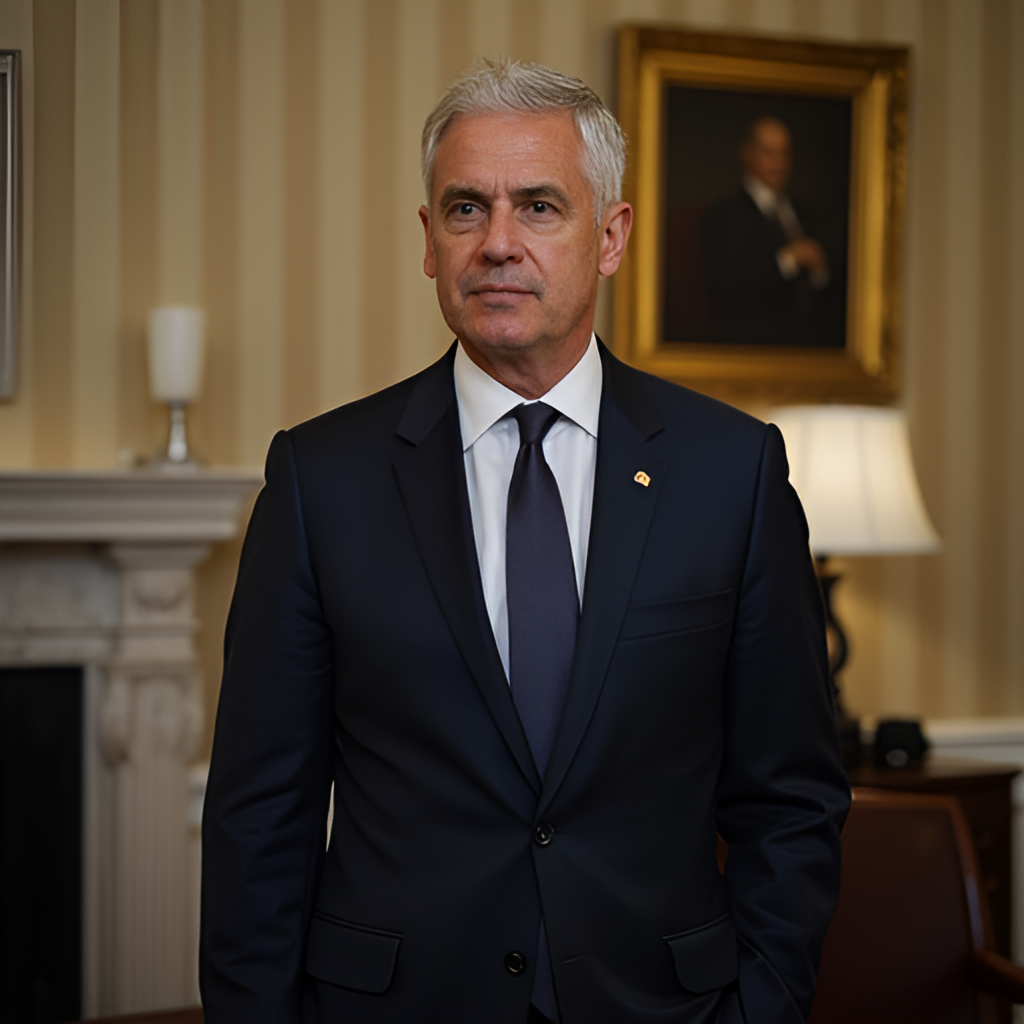
This image is a fictional image generated by GlobalTrendHub.
Serving as chief of staff requires an ability to make tough decisions and manage competing interests. It’s a high-pressure environment where success often hinges on a chief’s ability to keep things running smoothly, even when crises hit. Emanuel’s time in this role cemented his reputation as a formidable political force.
Rahm Emanuel as Mayor of Chicago
In 2010, Rahm Emanuel resigned as Chief of Staff to run for Mayor of Chicago. This was a significant pivot, moving from national politics back to his hometown. Despite legal challenges regarding his residency, he won the election in February 2011 and served as the 55th Mayor of Chicago from 2011 to 2019.
Rahm Emanuel’s time as mayor was marked by ambitious goals and significant challenges. His administration focused on strengthening the city’s economy, improving education, and addressing public safety. He is credited with adding four years to students’ education by increasing the school day and year, implementing universal pre-kindergarten and full-day kindergarten, and making Chicago the first city to offer free community college.
Under his leadership, Chicago saw increased corporate relocations and foreign direct investment, becoming a leader in the U.S. He also oversaw significant infrastructure projects, including the expansion of the Chicago Riverwalk, which has transformed the city’s downtown area. My experience living near Chicago during this time, while not directly involved, allowed me to see the tangible changes happening – the Riverwalk, for example, became a vibrant hub that wasn’t there before.
However, his tenure wasn’t without controversy. The handling of the Laquan McDonald shooting case led to significant public outcry and contributed to declining approval ratings. Dealing with the city’s deep financial challenges and complex labor relations, particularly with the teachers’ union, also presented persistent hurdles. His legacy as mayor is often described as “mixed,” acknowledging both significant achievements and notable criticisms.
Ambassador Emanuel’s Diplomatic Role
After leaving the mayor’s office, Emanuel’s career took another turn onto the international stage. In 2021, President Biden nominated him to be the United States Ambassador to Japan, a position he held until January 2025. This role saw Rahm Emanuel representing American interests in a key geopolitical ally in the Indo-Pacific region.
As Ambassador, Emanuel focused on strengthening the U.S.-Japan alliance, particularly in defense cooperation. He worked to deepen ties and facilitate collaboration on security challenges. My personal perspective is that his background as a seasoned political operator likely served him well in the complex world of international diplomacy, requiring strong negotiation and relationship-building skills.
He actively engaged with the Japanese public and government, often using social media in unconventional ways for a diplomat. This modern approach to ambassadorship aimed to connect more directly with the people he was serving. His tenure concluded with the end of the Biden administration, marking the latest chapter in a diverse career.
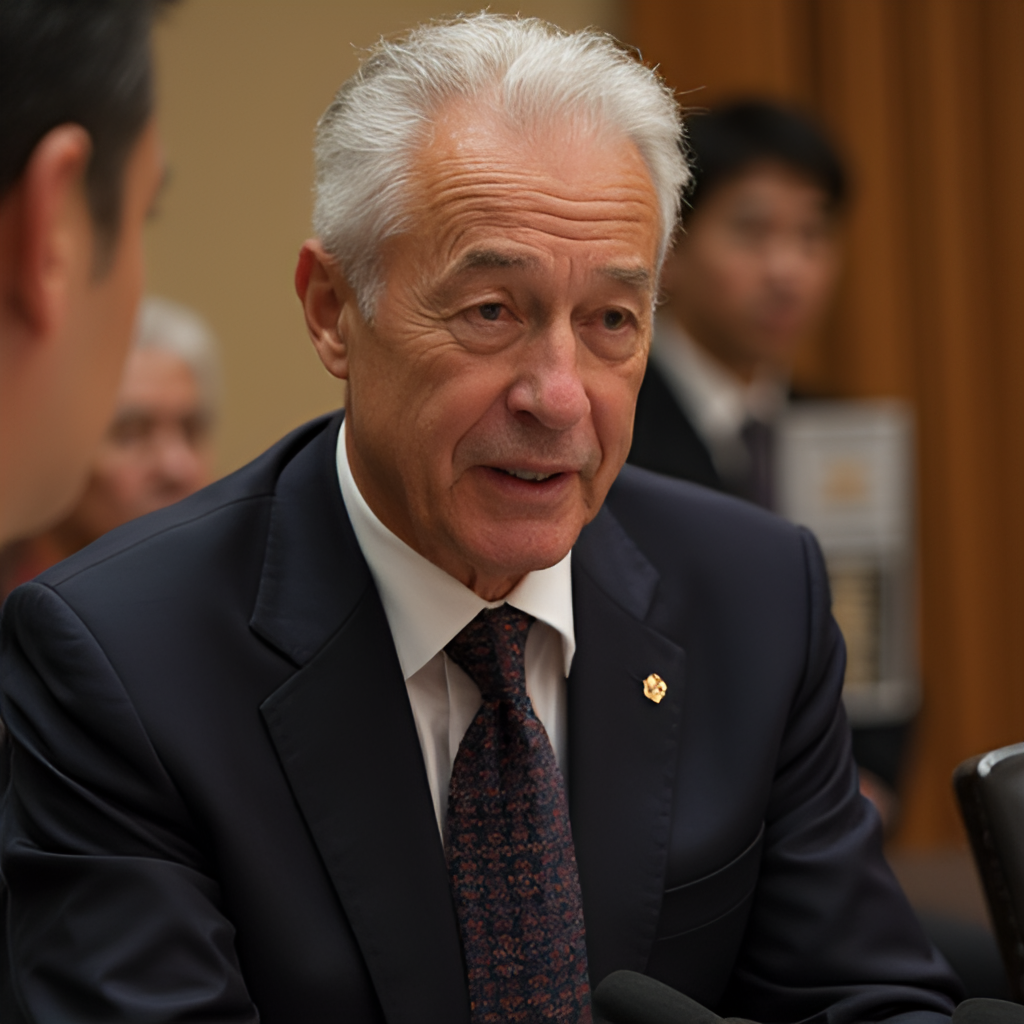
This image is a fictional image generated by GlobalTrendHub.
Looking Ahead: Potential Political Ambitions
With his time as Ambassador to Japan concluded, speculation has naturally turned to what Rahm Emanuel might do next. He has publicly acknowledged considering a run for president in 2028. This wouldn’t be surprising given his extensive experience at nearly every level of government and his continued engagement with political commentary, often offering sharp critiques of the current political landscape.
His consideration of a 2028 bid highlights his enduring ambition and belief that he has something unique to offer the country. Whether he ultimately decides to run or takes on a different role remains to be seen, but it’s clear that Rahm Emanuel isn’t stepping away from the public arena anytime soon.
Reflecting on Rahm Emanuel’s Impact
Rahm Emanuel’s career is a testament to a driven, often forceful, approach to politics and public service. From the Clinton and Obama White Houses to the mayor’s office in Chicago and his diplomatic post in Japan, Rahm Emanuel has consistently been at the center of action and decision-making. He’s a figure who elicits strong opinions, but his impact on policy, politics, and the cities he’s served is undeniable. Looking back, it’s clear that his trajectory reflects a deep commitment to shaping the country, even if the methods were sometimes controversial. Understanding Rahm Emanuel means understanding a significant part of modern American political history.