
Jason Day: The Resilience of a Champion
- Introduction to the Journey of Jason Day
- Early Life and the Path to Professional Golf
- Breakthrough Season and Reaching World No. 1
- Battling Injuries and Navigating Setbacks
- Jason Day’s Distinctive Playing Style and Approach
- Off the Course: Family and Philanthropy
- The Recent Comeback and What Lies Ahead
- Jason Day: A Legacy of Perseverance
Jason Day has long been a captivating figure in the world of golf, known for his powerful swing, emotional victories, and a career marked by both incredible highs and significant challenges. As someone who’s followed the PGA Tour for years, I’ve always found Day’s journey particularly compelling. It’s a story not just of talent, but of resilience and the sheer will to overcome adversity. From his early days in Australia to reaching the pinnacle of the sport, his path offers some valuable lessons.
We’re talking about an Australian golfer Jason Day who broke through on the world stage with a major championship win and ascended to the top ranking. His career hasn’t been a smooth ride, though. We’ve seen him battle serious injuries and personal loss, only to fight his way back into contention time and again. It makes you wonder, what drives someone to keep pushing when the physical and mental toll is so high? Let’s take a closer look at the man behind the powerful drives and clutch putts.
Early Life and the Path to Professional Golf
Born in Beaudesert, Queensland, Australia, in 1987, Jason Day’s introduction to golf came at a young age, thanks to his father, Alvin, who found a discarded golf club. That simple act sparked a passion that would define his life. Day’s natural talent was evident early on, and he quickly progressed through the junior ranks in Australia.
However, his early life was marked by tragedy. Day lost his father to stomach cancer when he was just 12 years old, a profoundly difficult period that he has spoken about openly. This loss could have easily derailed a young life, but it also seemed to fuel a determination within him. He moved to Kooralbyn International School, where he trained rigorously under the guidance of his coach, Colin Swatton, who would become a pivotal figure in his life, even caddying for him later in his career.
Day turned professional in 2006 at the age of 19. His early years on the Nationwide Tour (now the Korn Ferry Tour) were a crucial proving ground. He secured his first professional win at the Legend Financial Group Classic in 2007 and earned his PGA Tour card for the 2008 season. Making your way on the PGA Tour is incredibly tough, and Jason Day had to grind to establish himself among the world’s best.
Finding His Footing on Tour
The initial years on the PGA Tour were a learning curve. Day showed flashes of brilliance and contended in events, but his breakthrough PGA Tour victory came in May 2010 at the HP Byron Nelson Championship. This win was significant; he became the youngest Australian to win a PGA Tour event at the time. This victory wasn’t just a trophy; it was confirmation that he belonged and could win at the highest level.
Over the next few years, Day continued to develop his game and became a consistent contender in major championships. He had several close calls, including runner-up finishes at the Masters Tournament and the U.S. Open in 2011 and another runner-up at the U.S. Open in 2013. These experiences, while perhaps frustrating at the time, were clearly building blocks. They showed he had the game to compete with the best, and it felt like only a matter of time before he’d capture a major title.
Breakthrough Season and Reaching World No. 1
The year 2015 was, without question, a watershed moment for Jason Day. Everything seemed to click, and he had a season that many golfers only dream of. He won five times on the PGA Tour that year, but the highlight was undoubtedly his first major championship victory.
At the PGA Championship at Whistling Straits, Day put on a dominant performance, winning by three strokes over Jordan Spieth. What made this win even more historic was his score; he finished at 20-under par, setting a new record for the lowest score to par in a major championship at the time. It was a truly emphatic way to capture that elusive first major.
Winning a major is monumental, but Day didn’t stop there. His incredible form in 2015 propelled him to the top of the Official World Golf Ranking, a position he first reached in September 2015. He held the number one spot for a total of 51 weeks, including a stretch of 43 consecutive weeks in 2016. To reach world number one requires sustained excellence, and Jason Day demonstrated that in spades during this period. Winning The Players Championship in 2016 further solidified his status as the best player on the planet.
Battling Injuries and Navigating Setbacks
As exhilarating as his rise to world number one was, the years that followed saw Jason Day face significant challenges, primarily due to injuries. Chronic back problems have plagued much of his career, often forcing him to withdraw from tournaments or play through considerable pain.
I remember watching tournaments where he was clearly uncomfortable, receiving on-course treatment, yet still grinding to finish. It highlighted the mental toughness required, but it also made you worry about the long-term impact on his body and career. Beyond the back issues, he also famously collapsed at the 2015 U.S. Open due to a bout of vertigo, a condition he has managed for years. Talk about playing under pressure – dealing with dizziness and nausea while trying to win one of golf’s toughest tests is something else entirely.
These physical setbacks inevitably affected his performance and world ranking. After being a consistent top-15 player, his ranking dropped significantly in the years following 2016, at one point falling outside the top 100. For a player who reached the summit, this period must have been incredibly frustrating and demoralizing. Day himself has spoken about the “dark times” during this period, admitting there were moments he considered stepping away from the game due to the pain and lack of enjoyment.

This image is a fictional image generated by GlobalTrendHub.
Swing Changes and the Road Back
Facing persistent pain, particularly in his back, Day made the difficult decision to overhaul his golf swing. This is a huge undertaking for any elite golfer, let alone one who relies on a powerful, athletic motion. He began working with renowned swing coach Chris Como to build a swing that would be less taxing on his body. Changing something so fundamental to your game is a risk, but it was a necessary step for Jason Day to prolong his career and find a way to play without constant pain.
The road back was gradual. There were periods where the results weren’t there, but he continued to put in the work, focusing on strengthening his body and refining the new movements. It requires immense patience and belief in the process, even when the scoreboard doesn’t reflect the effort. Recently, he has also reunited with his long-time coach, Colin Swatton, specifically focusing on his short game and putting.
Jason Day’s Distinctive Playing Style and Approach
When you watch Jason Day play, several things stand out. Historically, his game was built around powerful driving and an exceptional short game, particularly his putting. When he was at his peak, his putting was arguably the best in the world, characterized by a unique, deliberate routine and incredible touch on the greens. He wasn’t afraid to take aggressive lines off the tee, leveraging his power to gain an advantage on longer courses.
He also possesses a creative short game. Watching him practice chipping, you see him experimenting with different clubs and trajectories, trying to find the best way to get the ball close depending on the lie and green contour. This willingness to be imaginative around the greens is a hallmark of elite players.
Beyond the technical aspects, Day’s approach on the course often reveals a deep intensity and focus. He gets very locked in, sometimes showing visible emotion after a crucial shot, whether it’s a fist pump after a big putt or a frustrated reaction after a missed opportunity. This passion is part of what makes him compelling to watch. It feels authentic, like you’re seeing someone who deeply cares about performing at his best.
Evolving Style: On and Off the Course
In recent years, Jason Day has also garnered attention for his evolving fashion choices on the course. After his partnership with Nike ended, he signed with Malbon Golf and has embraced a more distinct, sometimes unconventional look compared to the traditional golf attire. We’ve seen him in everything from bold patterns and sweater vests to unique trousers and even a sweatsuit during a practice round.
This shift feels like a reflection of his personality and a willingness to express himself. In a sport often criticized for its staid fashion, Day is pushing boundaries and showing that golfers can have personal style. It’s been debated among fans, sure, but it adds another layer to his public persona and makes him stand out.
Off the Course: Family and Philanthropy
Away from the fairways and greens, Jason Day’s family life is clearly a huge part of who he is. He is married to Ellie Day (née Harvey), and they have five children: Dash, Lucy, Arrow, Oz, and Winnie. Ellie is often seen supporting him at tournaments, and their family life is something he frequently mentions as providing perspective and motivation.
The couple is also involved in philanthropy. They launched the Brighter Days Foundation in 2015, which focuses on supporting child-serving organizations in Central Ohio, where they reside. Their work through the foundation highlights a commitment to giving back and making a positive impact beyond the golf course.
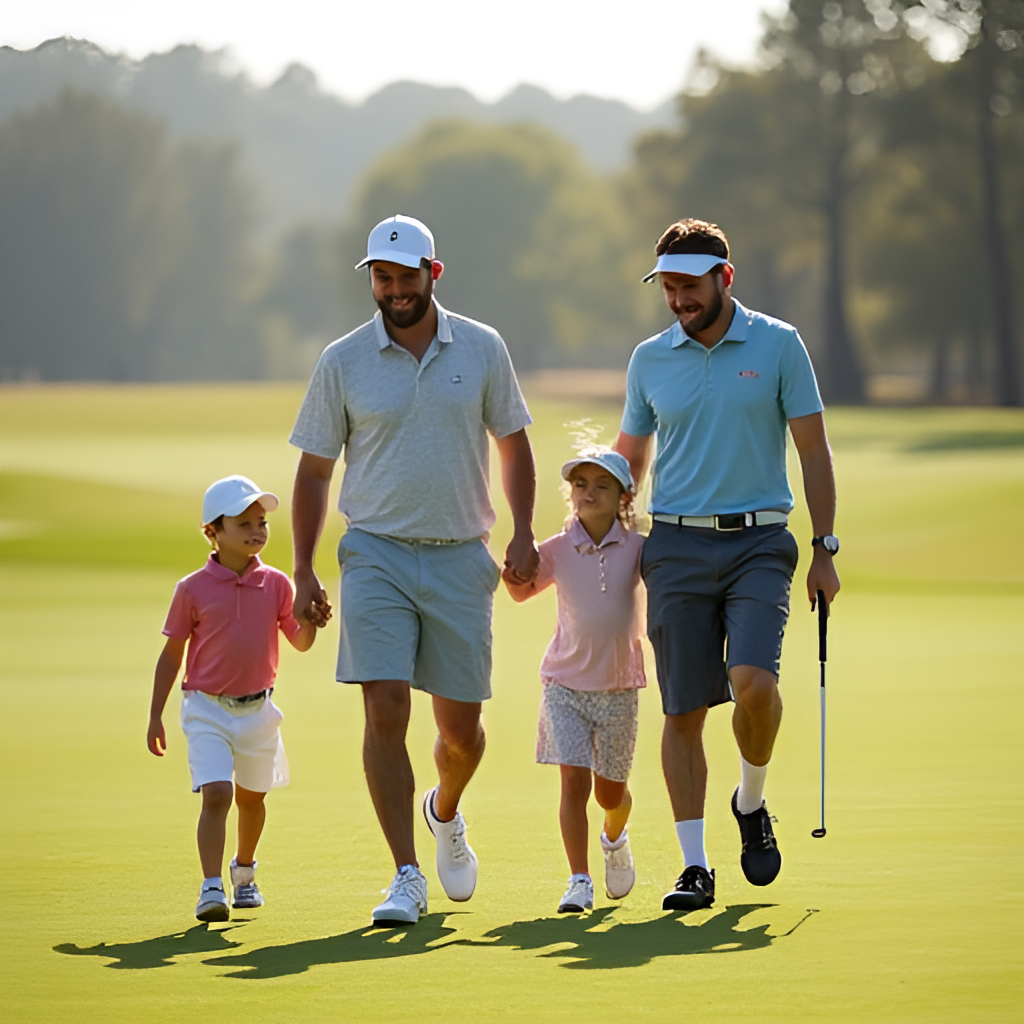
This image is a fictional image generated by GlobalTrendHub.
The Recent Comeback and What Lies Ahead
After several challenging years marked by injuries and struggles with form, Jason Day has shown significant signs of resurgence. In May 2023, he won the AT&T Byron Nelson, his first victory in five years, fittingly at the same tournament where he claimed his maiden PGA Tour title. This win was deeply emotional for him, coming on Mother’s Day and just over a year after the passing of his mother, Dening, from cancer.
The 2023 season also saw him contend in majors again, finishing runner-up at The Open Championship. This result was particularly notable as it meant he had now finished runner-up in all four major championships, completing the “runner-up grand slam.” While not a victory, it’s a testament to his consistent ability to put himself in contention on golf’s biggest stages.
Currently, Jason Day’s ranking has climbed back inside the top 40 in the world, a solid improvement from his lower points. He has also expressed a strong desire to represent Australia in the Olympics, aiming for the Paris 2024 games after not competing in 2016. This indicates a renewed enthusiasm and focus on his career.
However, the injury concerns haven’t entirely disappeared. Recent reports in May 2025 mentioned a neck injury forcing him to withdraw from a tournament ahead of the PGA Championship, highlighting that managing his physical health remains an ongoing battle. Despite this, the resilience he has shown throughout his career suggests he will continue to work through these issues.
Jason Day: A Legacy of Perseverance
The career of Jason Day is a compelling narrative of immense talent, hard-earned success, and persistent battles against adversity. He reached the pinnacle of golf, winning a major championship and becoming the world number one, only to face years of challenging injuries that tested his physical and mental strength. Yet, through it all, Jason Day has demonstrated remarkable resilience, a willingness to adapt his game and approach, and a deep love for competition.
As someone who’s watched his journey unfold, I’m consistently impressed by his ability to bounce back. His story serves as a powerful reminder that even at the highest level of professional sport, the human element—dealing with pain, setbacks, and personal loss—is always present. His recent return to the winner’s circle and contention in majors shows that when healthy and motivated, Jason Day is still one of the best golfers in the world. His legacy won’t just be defined by his wins or ranking, but by the perseverance he’s shown throughout a challenging, yet ultimately inspiring, career.